
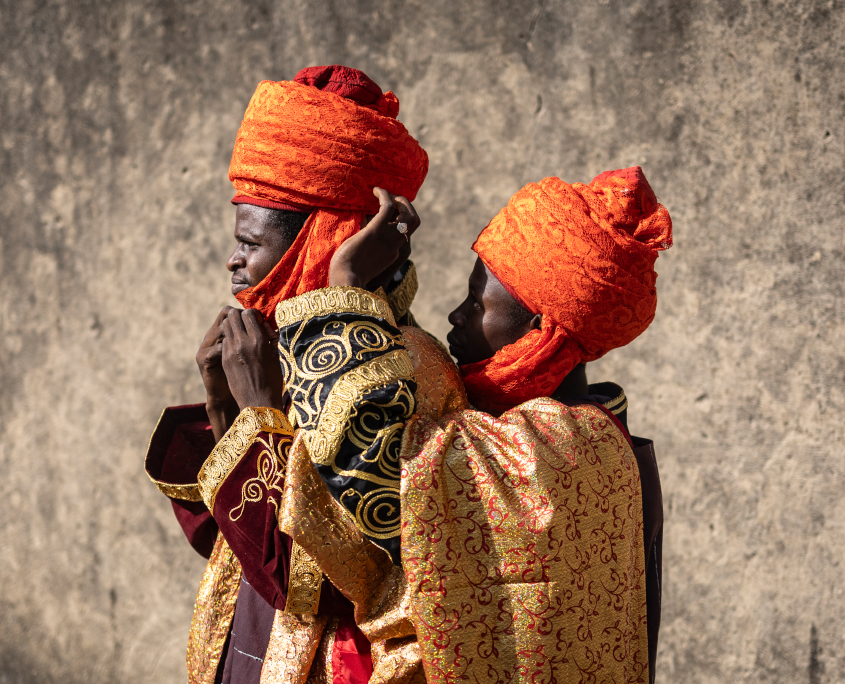
International Human Solidarity Day
Rebuilding human solidarity in Africa’s evolving societies
Africa’s transformation depends not only on the adoption of new technologies or economic reforms but also on strengthening a culture of informed participation. Public opinion, when grounded in accurate information, open dialogue, and inclusive civic spaces, plays a critical role in shaping policies that reflect diverse African priorities. Across the continent, citizens, civil society organisations, community groups, and local leaders already make significant contributions to national development. Recognising and supporting this collective engagement is key to building more resilient societies.
Historically, many African communities valued cooperation and mutual support, whether expressed through shared labour systems, family networks, religious institutions, or local governance structures. While these forms of solidarity varied widely across regions and cultures, they often helped communities navigate social and economic challenges. Today, as African societies evolve, shaped by urbanisation, migration, shifting demographics, and new technologies, these traditional forms of cooperation are transforming rather than disappearing. In some places, they remain strong; in others, they are adapting to new realities.
In East Africa, rapid urban growth in cities like Nairobi, Dar es Salaam, and Addis Ababa has created new opportunities for economic collaboration but also pressures on social cohesion as families disperse and new social norms emerge. In West Africa, strong traditions of ethnic, religious, and linguistic diversity coexist with modern social movements, particularly among youth who organise around issues such as governance, climate change, and creative industries.
Southern Africa continues to grapple with high inequality and labour market transitions, but also demonstrates robust community-based responses to public health challenges, including HIV and, more recently, mental health. As for North Africa, experiences reflect a blend of local customs, Mediterranean influences, and strong civil-society traditions, with cooperation visible in community networks, youth initiatives, and women-led associations.
These regional dynamics illustrate that Africa’s social fabric is not weakening but undergoing change, sometimes challenging, sometimes generative. Social connections may be shifting from extended family structures to new forms of association, such as professional networks, faith communities, digital platforms, neighbourhood groups, and youth movements. These emerging forms of solidarity offer fresh avenues for collective participation.
Simultaneously, modern social and economic pressures can create feelings of fragmentation or mistrust. Urban residents may struggle with anonymity and limited community ties. Economic inequality, displacement, and political tensions can strain relationships within and between groups. Digital technologies connect people across borders but can also deepen divisions if information is misused or if civic spaces become polarised. Addressing these challenges requires investment in inclusive and equitable social systems.
Human cooperation remains essential for navigating this complexity. Research across multiple disciplines shows that people tend to work together not only because of cultural norms but because collaboration provides practical benefits, such as improving livelihoods, supporting wellbeing, and enhancing collective problem-solving. In Africa, this cooperation is evident across countless settings: community-led savings groups, agricultural cooperatives, mutual aid networks, youth innovation hubs, and regional partnerships addressing health, climate, and security challenges.
Strengthening human solidarity, therefore, involves creating conditions where cooperation can thrive. Such conditions include expanding civic education, supporting community-based initiatives, investing in spaces for public dialogue, and ensuring equitable access to opportunities. It also requires recognising the many forms of solidarity that already exist, traditional and modern, formal and informal, rural and urban.

