
World Water Day
Enabling women’s role in water governance
Women play a crucial yet often overlooked role at the centre of household water management within many communities. This central role places them at the heart of water access, quality monitoring, and daily allocation decisions. However, while women carry the burden of provision, they are not always included in the systems that govern how water is managed, financed, or distributed.
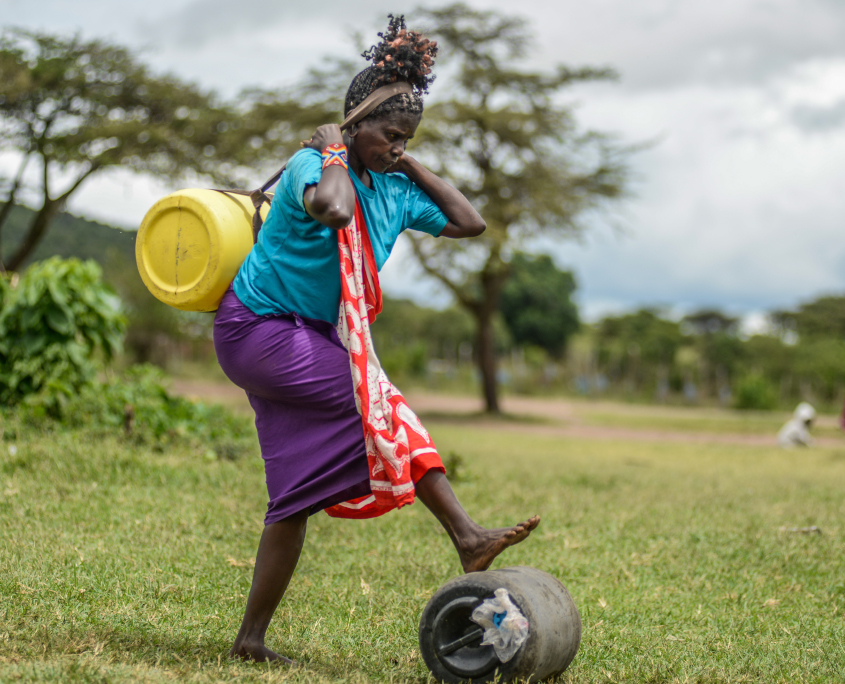
According to the United Nations, in two out of three households globally, women bear the main responsibility for water collection. Although this responsibility does not automatically translate into authority, women’s daily interaction with water systems can give them practical knowledge that is both technical and strategic. They understand seasonal changes in water availability, the reliability of specific sources, the health implications of poor-quality water, and the time costs associated with distant collection points. This lived expertise positions them as valuable contributors to water governance. However, without structural mechanisms that convert experience into influence, their insights often remain confined to the household level.
Development programmes sometimes recognise women as key beneficiaries of water interventions, such as installing boreholes closer to homes or improving sanitation facilities, to reduce physical strain. While these measures are essential, they may not shift underlying power dynamics. If women remain excluded from water committees, budget decisions, and infrastructure planning, the governance structure remains unchanged. The burden may be reduced, but authority is not redistributed.
Structurally enabling women’s leadership requires intentional design. To achieve this, we need to ensure that representation in water user associations and local governance bodies is meaningful. Use quotas or minimum participation requirements as entry points, but pair them with leadership training, technical capacity-building, and access to information. Schedule meetings that accommodate women’s workloads, and ensure participation does not impose additional unpaid labour. Above all, inclusion must be supported and resourced, or it risks becoming an added burden on women’s time rather than a pathway to real influence.
Economic recognition is also critical. Water collection is often treated as unpaid domestic labour, invisible in national accounting systems. Yet the time and physical effort involved carry measurable economic costs. When water systems are inefficient, women’s capacity to pursue education, paid employment, or entrepreneurship is constrained. Framing water access as an economic issue rather than solely a social one can shift policy discussions. Consequently, investments in infrastructure become not just service delivery improvements, but catalysts for productivity and economic participation.
Communication strategies also play a complementary role. Public narratives often depict women as resilient water carriers, emphasising endurance over agency. While resilience is admirable, centring hardship can normalise inequity. Balanced storytelling can highlight women as decision-makers, engineers, leaders, and advocates.
Enabling women’s leadership in water management is not about shifting responsibility from institutions to individuals or reinforcing the idea that water is inherently “women’s work.” Rather, it recognises that those who manage water daily possess knowledge that improves system design and sustainability. When governance structures exclude that expertise, policies risk being inefficient or misaligned with community realities.
For true structural change, there is a need to implement coordinated actions: enact legal frameworks mandating gender-balanced representation, launch comprehensive capacity-building initiatives to strengthen women’s financial and technical skills, establish transparent budgeting, and foster community dialogues to address restrictive social norms. These measures promote both inclusion and accountability.
Policies should also ensure women’s participation in leadership roles. Programmes must provide training and resources to enable women’s representation. Narratives need to highlight women’s voices and perspectives in decision-making. These steps are necessary to transform responsibility into representation, and representation into real decision-making power.

