
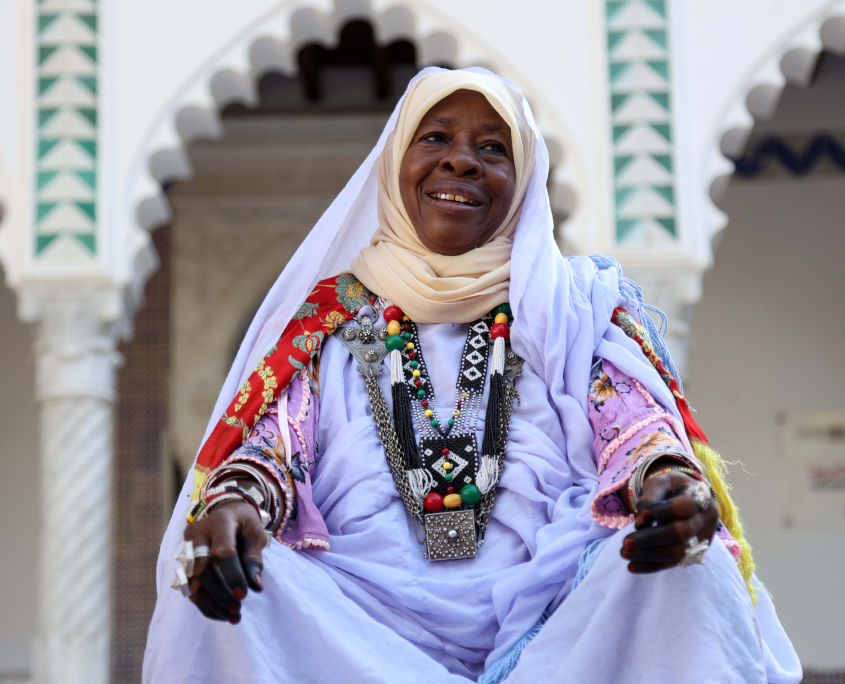
Photo Credit: Billel Bensalem/APP/NurPhoto via Getty Images
World Telecommunication and Information Society Day
Culture as a public good
In many African societies, culture remains far more than heritage or tradition. It continues to function as a living social system that shapes values, strengthens social cohesion, defines identity, and transfers knowledge across generations. In both rural and urban communities, cultural systems still influence conflict resolution, caregiving, food production, environmental stewardship, and community support networks. Yet, despite this enduring role, culture is often treated symbolically rather than strategically in development planning.
The growing conversation around culture as a public good challenges this perception. It suggests that culture should not be viewed only through the lens of individual ownership, consumption, or preservation, but as a shared societal asset capable of advancing broader development goals across the continent.
Africa’s cultural systems already provide forms of resilience that formal institutions alone cannot always deliver. Community-based conflict mediation structures, collective caregiving traditions, and indigenous environmental practices continue to support social stability in many contexts. These systems are active frameworks through which millions of people navigate daily life. Recognising culture as a development asset therefore requires moving beyond the assumption that modernisation and traditional systems must exist in opposition. Instead, it calls for identifying how cultural structures can complement policy, strengthen institutions, and improve community-level outcomes.
This shift becomes increasingly important as Africa confronts interconnected challenges, including climate change, food insecurity, unemployment, and rapid urbanisation. A significant amount of African knowledge remains embedded within cultural systems, including indigenous medicine, farming techniques, oral histories, ecological management practices, and language systems. Much of this knowledge has historically been sidelined as “informal” or “traditional,” despite its relevance to contemporary challenges.
For example, indigenous agricultural knowledge often reflects generations of adaptation to local environmental conditions. Traditional ecological practices can provide insights into water conservation, biodiversity management, and climate resilience. Oral knowledge systems preserve histories and social memory that formal archives may not capture. Rather than existing outside development frameworks, these systems can contribute directly to Africa’s climate adaptation strategies, food security initiatives, biodiversity conservation efforts, and educational models.
At the same time, Africa’s creative and cultural industries are emerging as major economic sectors. Music, film, fashion, publishing, crafts, digital content creation, and cultural tourism are generating employment, attracting investment, and shaping global perceptions of the continent. Urban centres such as Lagos, Nairobi, Dakar, and Johannesburg have increasingly become hubs of cultural production and innovation.
Viewing culture as a public good therefore implies that these industries should be protected, funded, digitised, and integrated into economic policy rather than treated as peripheral sectors. Investment in cultural infrastructure, intellectual property protection, digital platforms, and creative education can strengthen both economic participation and cultural preservation. As digital technologies expand across the continent, there is also an opportunity to document and archive cultural knowledge in ways that make it more accessible to future generations.
Importantly, positioning culture within development policy is not simply about preserving identity. It is about recognising that development outcomes are often shaped by the systems of meaning, trust, and collective behaviour within societies. Policies that fail to engage with cultural realities frequently struggle to achieve long-term impact because they remain disconnected from how communities actually function.
Treating culture as a public good ultimately reframes it from being a passive inheritance to an active development resource. It recognises that Africa’s cultural systems are not obstacles to progress, but part of the foundation upon which more resilient, inclusive, and sustainable futures can be built.

