
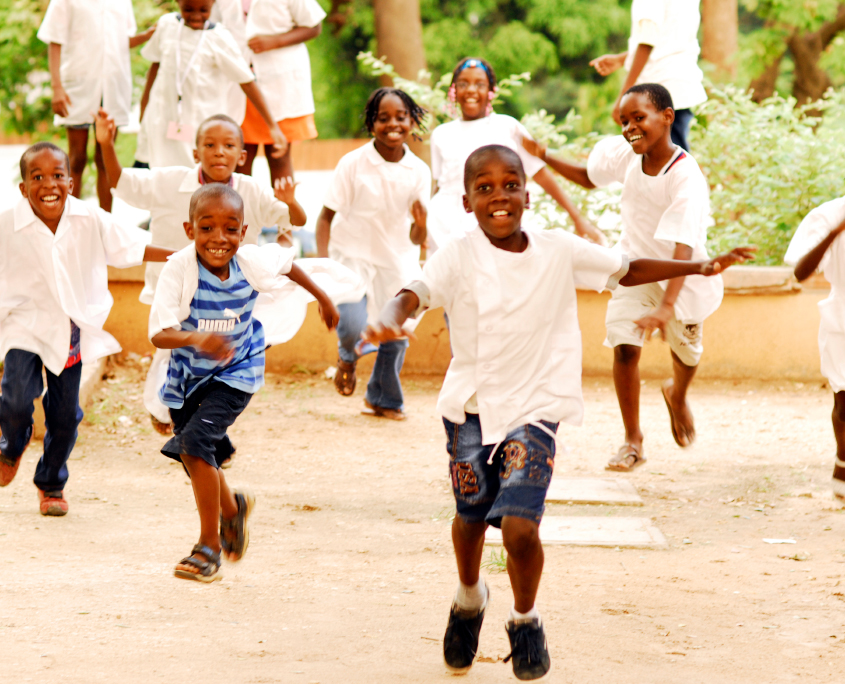
Photo Credit: Anthony Asael/Art in All of Us via Getty Images
International Day of Play
Play creates a space where possibility can be explored
At its essence, play is a voluntary engagement with possibility. It is one of the primary ways humans, and many animals, explore the world, relationships, identity, risk, imagination, and meaning without the immediate pressure of survival or fixed outcomes. Play creates a temporary space where ordinary rules can be stretched, reversed, tested, or reinvented. In that space, experimentation becomes safe enough to attempt.
Fundamentally, play is not defined by the activity itself, but by the spirit in which the activity is approached. The same action can be work in one context and play in another. What distinguishes play is usually the freedom, curiosity, improvisation, exploration, and intrinsic engagement rather than purely external reward. For example, a child stacking blocks, adults debating ideas creatively, musicians improvising, athletes competing, friends teasing each other, or scientists experimenting with theories all contain elements of play when the activity allows openness, uncertainty, and discovery.
As the world commemorates International Day of Play, we take a deep dive into how play serves several interconnected human functions.
Play has been known to allow living beings to explore reality before fully committing to it. Children rehearse adulthood through pretend games. Animals simulate hunting, fighting, or social interaction through playful behaviour. Adults mentally simulate futures, identities, and possibilities through storytelling, humour, art, games, and intellectual experimentation. In this context, play is often how organisms learn complexity safely.
Play creates social bonds because it depends on shared participation and mutual recognition. Humour, games, storytelling, dancing, and conversation all help establish trust, emotional connection, cooperation, and a sense of social belonging. Even conflict can become manageable through play, as it introduces flexibility into interaction. It signals “We are engaging, but not destroying each other”. This is why play is closely tied to dialogue, creativity, and culture.
Through play, it is possible to suspend rigid reality long enough for new possibilities to emerge. Innovation often begins in playful thinking: “What if?”, “Suppose we tried this differently”, or “What happens if the rules change?” Many scientific discoveries, artistic breakthroughs, and social innovations emerge from spaces where experimentation is temporarily freed from immediate practicality. It creates conditions for imagination. This is especially important when dealing with life’s unpredictability. Play helps humans practice dealing with uncertainty emotionally and cognitively. Games, role-play, fiction, and competition all create controlled uncertainty: we do not fully know the outcome, but the stakes are manageable enough to keep engaging. In this sense, play builds resilience, adaptability, and emotional flexibility.
Modern societies often value activities mainly for productivity or measurable outcomes. However, play resists this logic. True play is often “unproductive” in the narrow economic sense. Yet paradoxically, it may produce learning, innovation, emotional health, social cohesion, and cultural meaning. It reminds us that not all value comes from efficiency. It therefore allows people to try out different versions of themselves, such as people experimenting with roles, personalities, social boundaries, aspirations, and emotions. This is why play is deeply connected to personal growth and cultural expression.
At its deepest level, play is about creating a space where possibility can be explored without complete consequence. It is how humans learn, imagine, connect, adapt, negotiate uncertainty, and create meaning together. Without play, societies may become efficient but rigid, informed but unimaginative, and connected technologically but emotionally distant. It keeps human systems flexible enough to evolve.

