
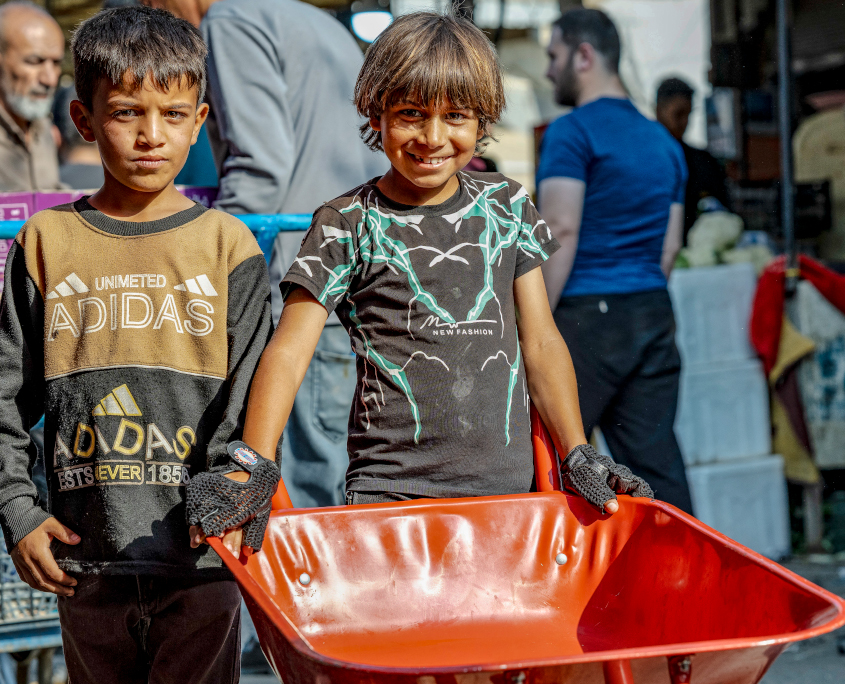
Photo Credit: Omar Karim Middle East Images/AFP via Getty Images
International Day of Play
Understanding the many forms of child labour
It is not lost on one that World Day Against Child Labour is commemorated a day after International Day of Play. Child labour can constitute many forms of harm beyond physical hardship and dangerous working conditions. While hazardous labour is often the most visible aspect, the deeper harms of child labour are frequently psychological, developmental, social, educational, emotional, and even political. In many cases, the most enduring damage is not only what children are forced to do, but what they are prevented from becoming. The broader reality is that when children are forced to give up school, sports, play, and family life, these all constitute child labour.
Childhood is not merely a waiting period before adulthood but a critical stage of emotional, cognitive, social, and physical development. When children are absorbed into labour systems too early, many normal developmental processes are interrupted. Children may lose opportunities to develop social skills, build confidence, explore creativity, form healthy emotional attachments, and learn through play and interaction. This can affect long-term emotional resilience, decision-making, and interpersonal relationships.
One of the most significant harms of child labour is the disruption of education. Even when children attend school while working, exhaustion, absenteeism, and stress often reduce learning outcomes. Over time, limited education narrows future opportunities and traps many children in cycles of low-paying or exploitative work as adults. In this sense, child labour not only exploits present vulnerability but also reproduces intergenerational poverty.
It is well known that play is essential to healthy childhood development. Through play, children learn about cooperation, creativity, emotional regulation, problem-solving, and social negotiation. When work replaces play entirely, children may lose spaces where imagination, curiosity, and identity formation normally develop. This is particularly important because children do not simply need protection from harm. They also need opportunities for joy, exploration, and self-expression. A childhood dominated by labour can prematurely force children into adult survival roles before emotional maturity is fully formed.
Many forms of child labour expose children to fear, intimidation, humiliation, isolation, chronic stress, or emotional abuse. Consequently, children working in exploitative environments may internalise feelings of worthlessness or powerlessness. In severe cases, child labour can contribute to anxiety, depression, trauma, emotional withdrawal, or long-term psychological distress. Such emotional burden is often intensified when children feel responsible for family survival at an early age.
There are some forms of child labour that require children to migrate, live away from home, or work in unfamiliar environments. This can weaken family relationships and expose children to exploitation without protective support systems. Even when children remain with their families, labour pressures can alter normal family dynamics, especially when children assume adult responsibilities too early, caregiving relationships weaken, and emotional support structures erode under economic stress.
A crucial consequence of child labour is the increase in their vulnerability to physical abuse, sexual exploitation, trafficking, and forced labour. This is especially true in informal sectors where regulation and oversight are weak. Children are often less able to recognise exploitation, assert rights, or seek protection.
However, in all these conversations, it is equally crucial to distinguish between age-appropriate participation in family or community work and exploitative child labour. Not all work performed by children is automatically harmful. Across several societies, children contribute to households through light work that does not endanger health, interfere with schooling, and may even support learning and responsibility. The harm emerges when labour becomes exploitative, excessive, hazardous, developmentally inappropriate, or damaging to the child’s well-being and future. In many cases, child labour’s deepest harm lies in the erosion of childhood itself, the loss of the conditions children need not merely to survive, but to grow, imagine, learn, play, and develop into healthy and fully participating members of society.

