
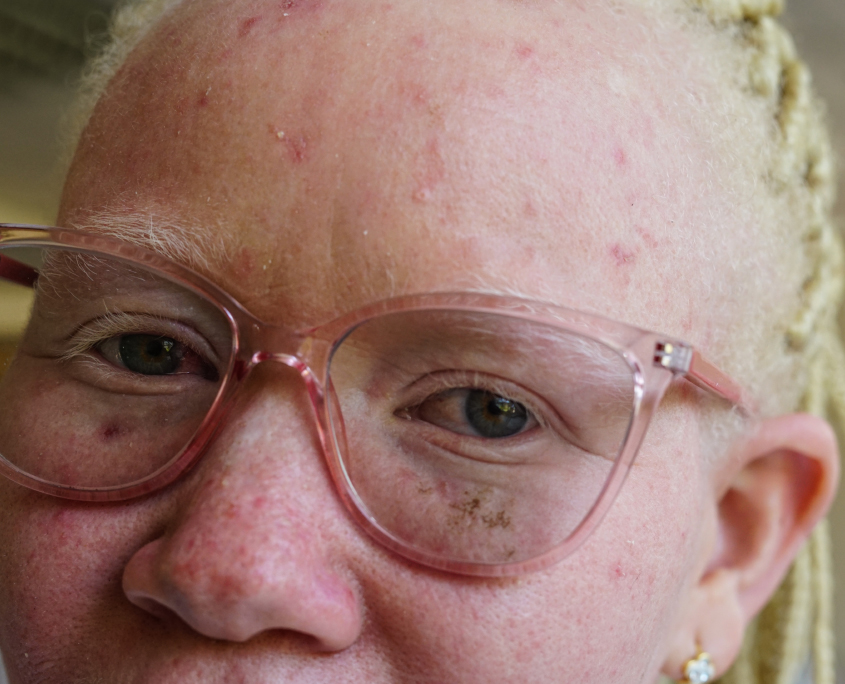
Photo Credit: James Wakibia/SOPA Images/LightRocket via Getty Images
International Albinism Awareness Day
Using data to make persons with albinism visible in public policy
Over the last two decades, the conversation about albinism in Africa has undergone remarkable transformation. What was once viewed primarily as a humanitarian or disability issue has evolved into a broader discussion encompassing human rights, public health, social inclusion, and protection. Today, albinism is firmly on the continental agenda, recognised not only by governments and civil society but also by regional and international institutions.
Several milestones have contributed to this shift. In 2015, the United Nations established the Independent Expert on the enjoyment of human rights by persons with albinism, creating a dedicated mechanism to advance awareness and accountability. This was followed by the African Commission on Human and Peoples’ Rights’ Regional Action Plan on Albinism (2017–2021) and the African Union’s Plan of Action to End Attacks and Other Human Rights Violations Targeting Persons with Albinism in Africa (2021–2031). These developments signal an important change where albinism is no longer a concern addressed solely by charities or disability organisations, but has become a recognised governance and human rights issue across the continent.
At the same time, civil society has played a critical role in reshaping the narrative. Organisations led by persons with albinism, supported by regional networks and national associations, have become increasingly visible and influential. Their advocacy has helped move discussions away from charity and victimhood towards rights, dignity, representation, and inclusion.
The conversation itself has also matured. While attacks, killings, and harmful myths remain pressing concerns, discussions now increasingly include access to sunscreen and skin cancer prevention, inclusive education, employment discrimination, political participation, representation in media and culture, disability rights, and gender-specific vulnerabilities. This broader perspective reflects a growing recognition that inclusion extends beyond protection from violence to ensuring equal opportunities and access to services.
Yet, despite this progress, the lack of reliable data remains a critical challenge. Many African countries still do not have comprehensive information on the number of persons with albinism within their populations. Data gaps also exist in areas such as health outcomes, educational attainment, employment status, access to services, and incidents of violence and discrimination. As a result, policymakers often lack the evidence needed to design targeted interventions, allocate resources effectively, and measure whether existing policies are achieving their intended outcomes.
This is where data becomes essential. Data and evidence-based policymaking provide the bridge between recognising rights and realising them. While many countries have adopted laws, policies, and commitments to protect and include persons with albinism, the true test lies in whether these measures lead to tangible improvements in people’s lives.
Reliable data helps make persons with albinism visible within national planning and budgeting processes. It enables governments to understand where services are needed, identify barriers to inclusion, and monitor progress over time. It also strengthens accountability by allowing policymakers, civil society organisations, and human rights institutions to assess whether commitments are being implemented effectively.
Africa has already made significant strides in advancing awareness and developing policy frameworks on albinism. The next step is ensuring that these frameworks are supported by robust evidence systems. With data, governments and stakeholders can track progress, address persistent inequalities, and build interventions that respond to real needs. Without it, inclusion efforts risk remaining aspirational.
Data may therefore be one of the most powerful tools available for advancing the rights of persons with albinism. By making communities visible in public policy, evidence can help transform commitments on paper into measurable, enforceable, and lasting inclusion outcomes.

