
World Population Day
The world’s population debate is really about opportunity
For decades, the dominant conversation about world population has been whether the world is becoming too crowded. This has gone so far that when people hear the words ‘world population,’ they often imagine crowded cities, traffic jams, overflowing classrooms, or headlines warning that there are simply too many people. Today, the real debate is no longer about how many people live on the planet but about whether those people have the opportunity to live healthy, productive, and fulfilling lives.
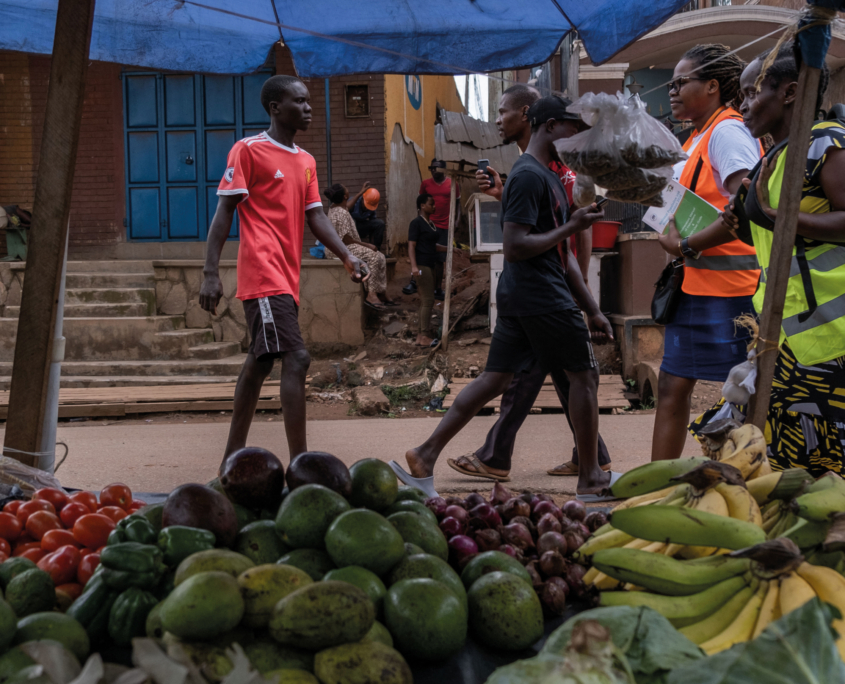
Walking through any village, town, or city across Africa, one thing is clear: Africa is young. Streets are filled with children walking to school, young people looking for work, entrepreneurs starting businesses, and families building better futures. This youthful population is often described as a challenge, but it could just as easily become Africa’s greatest advantage.
The difference lies in opportunity. Although a growing population can place pressure on schools, hospitals, housing, and jobs, it can also become a powerful engine of innovation, economic growth, and social progress when people have access to quality education, healthcare, decent employment, and the freedom to turn ideas into enterprises. In other words, people are not the problem. A lack of opportunity is.
The debate is also changing because the rest of the world is changing. While many African countries have youthful populations, several countries in Europe and Asia are experiencing the opposite challenge. Their populations are ageing, fewer children are being born, and workforces are shrinking. Some are now asking how to attract younger workers and sustain economic growth.
These contrasting realities remind us that there is no single global population problem. Different regions face different demographic futures, each requiring different solutions.
Another important conversation centres on urbanisation. Every day, rural communities continue to grow into towns, and towns into cities. This transformation creates new opportunities for business, education, and access to services. At the same time, it increases demand for roads, water, housing, transport, and jobs. The challenge is not to stop urbanisation but to ensure that cities grow in ways that improve people’s quality of life rather than strain it.
Population discussions are also becoming closely linked to climate change. It is easy to assume that more people automatically mean greater environmental pressure. However, the issue is more complicated. How we produce food, generate energy, manage waste, and use natural resources often has a greater impact than population numbers alone. Sustainable development is therefore as much about smarter choices as it is about demographic trends.
Perhaps the most encouraging shift in today’s debate is that people are increasingly being viewed not simply as numbers to be counted, but as potential to be developed. A healthy, educated, and skilled population is one of the most valuable resources any nation can possess. Every teacher who inspires a student, every farmer who adopts a better practice, every entrepreneur who creates jobs, and every young person who learns a new skill contribute to a country’s development.
What this means is that the debate over the world’s population is not really about population at all. It is about people. It is about whether societies can create the conditions for individuals to thrive, contribute, and build better futures for themselves and those around them. In the case of Africa, its greatest resource is not hidden beneath its soil or stored in its rivers. It is found in its people. The question is no longer how many there are but how well they are prepared for the future.

