
World Youth Skills Day
Developing minds that can think and hands that can build
As the world commemorates World Youth Skills Day, this day invites us to ask an important question: What skills do young people need to succeed in the future?
The answers often focus on digital literacy, artificial intelligence, coding, entrepreneurship, and the jobs of tomorrow. These are all important. Yet in our enthusiasm to prepare young people for an increasingly knowledge-driven economy, we risk overlooking that societies are built not only by people who think, but also by people who make. However, the future will belong to young people who can do both.
For too long, education systems have encouraged a false choice between academic learning and practical training. Students are often expected to follow one path or the other, as though working with the mind is somehow separate from working with the hands. This division has shaped how we value professions, design curricula, and define success. Unfortunately, the challenges of the twenty-first century demand something different.
The engineer who designs a bridge benefits from understanding how it is constructed. The software developer who creates digital tools for farmers is more effective when they understand farming itself. The carpenter who can use digital design software, manage finances, and market products online creates greater value than one who relies solely on craftsmanship. Likewise, the entrepreneur who understands both production and business is better equipped to build sustainable enterprises.
To this end, developing both cognitive and practical skills equips young people not only to solve problems, but also to implement solutions. Critical thinking, communication, creativity, and analytical reasoning remain essential. So too do craftsmanship, technical competence, repair, fabrication, production, and the confidence to transform ideas into something tangible.
In Africa, the continent has one of the world’s youngest populations, but its labour markets are dynamic and often unpredictable. Many young people will move between formal employment, self-employment, agriculture, skilled trades, and entrepreneurship throughout their working lives. Others will create jobs that do not yet exist. Preparing them for this future means developing adaptability alongside expertise.
A young person who can analyse data and repair machinery, who understands digital technology and practical production, or who can write business plans while building products, is better positioned to respond to changing economic realities. Such versatility creates resilience. It enables people to seize opportunities rather than wait for them.
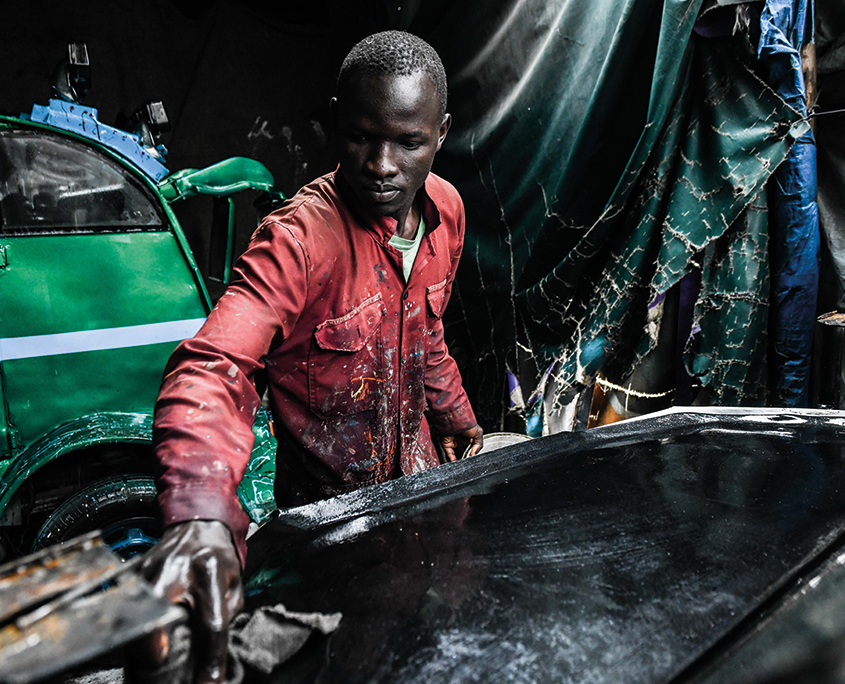
This also requires us to rethink how we value skills. Too often, manual work is viewed as less prestigious than office work, despite the fact that every economy depends on builders, technicians, artisans, mechanics, farmers, electricians, and manufacturers. Equally, practical skills alone are no longer enough in a world where technology, markets, and customer expectations continue to evolve.
For educators, this means designing learning experiences that integrate theory with practice. For employers, it means recognising the value of multidisciplinary talent. For governments, it means investing in education systems that give equal dignity to academic and technical pathways while creating opportunities for students to move between them. For young people, it means embracing lifelong learning, developing the curiosity to understand, the discipline to master a craft, and the confidence to keep adapting.
The future will be built by young people whose minds can think, whose hands can build, and whose ability to bring the two together enables them to create solutions, strengthen communities, and turn possibility into progress.

