
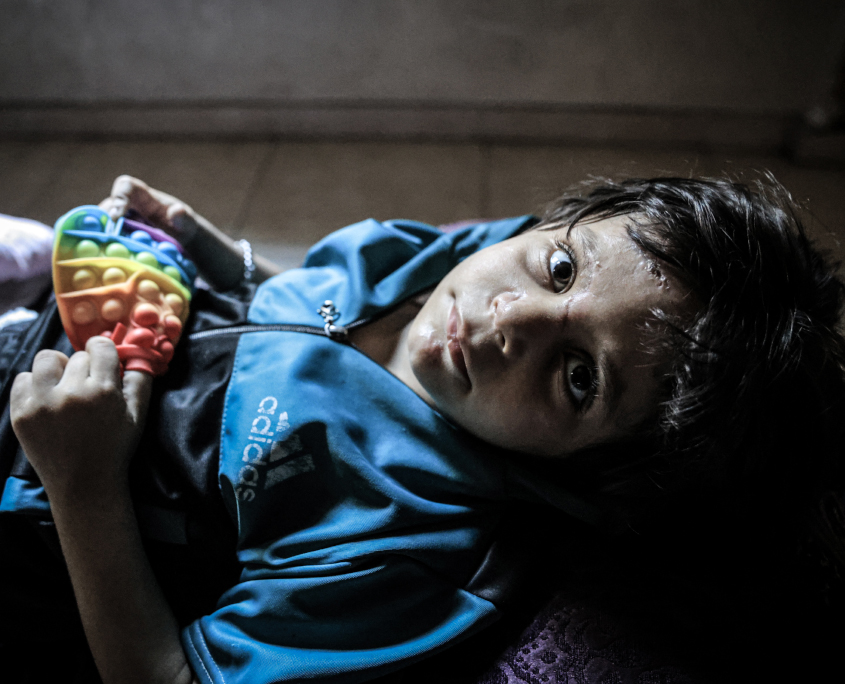
Photo Credit: Ahmed Jihad Ibrahim Al-arini/Anadolu via Getty Images
International Day of Innocent Children Victims of Aggression
The effects of war on children’s welfare
Armed conflict in Africa affects children in ways that extend far beyond immediate violence. Frequently, such conflict arises within societies already burdened by weak education systems, poverty, unemployment, displacement, political instability, and overstretched social services. Consequently, war not only interrupts childhood but also intensifies pre-existing vulnerabilities and reveals the limitations of systems that were already insufficient to protect or support children.
From a humanitarian perspective, children are frequently the most visible victims of conflict. This is because wars disrupt access to food, healthcare, education, shelter, and psychological stability. In conflict zones within the African continent, millions of children experience displacement, family separation, malnutrition, interrupted schooling, and exposure to trauma. Even when children survive physically, such prolonged insecurity has enduring effects on their emotional and cognitive development. As a result, childhood is often characterised more by survival and uncertainty than by growth and learning.
Socially, war undermines the structures that have traditionally supported children. In numerous African communities, extended families and communal care systems have historically played central roles in child rearing. However, conflict frequently fragments these networks through death, migration, displacement, or economic collapse. Parents may be compelled to leave children behind in pursuit of safety or employment, while grandparents and other relatives who would typically provide support may themselves be overwhelmed by instability. Under these circumstances, children risk losing not only physical protection but also emotional guidance, continuity, and a sense of identity.
From an educational perspective, many African education systems faced challenges prior to the conflict, including overcrowded classrooms, inadequate infrastructure, teacher shortages, and disparities in access between urban and rural areas. Armed conflict, therefore, exacerbates these issues by destroying schools, displacing teachers, and rendering learning environments unsafe or inaccessible. Consequently, some children spend years outside formal education, leading to generational gaps in literacy, skills, and economic opportunity. Even where schools remain operational, learning is frequently compromised by hunger, trauma, insecurity, or insufficient resources.
Economically, families often lose livelihoods, land, or property due to armed conflicts and become increasingly dependent on children for survival. This dynamic can contribute to child labour, early marriage, transactional relationships, or recruitment into armed groups. In certain contexts, children assume economic roles prematurely, taking on adult responsibilities before completing emotional or educational development.
War also produces less visible but profound effects. Psychologically, children exposed to violence, displacement, and instability may experience anxiety, grief, fear, aggression, emotional withdrawal, or long-term trauma. However, mental health support is limited in many conflict-affected regions. In societies with underdeveloped psychological care systems, children often process trauma without structured support. This can result in cycles of unresolved pain that persist within families and communities long after conflicts have ended.
It is equally important to note that conflict intensifies existing inequalities and institutional fragility. In societies where weak institutions, corruption, unequal development, exclusion, and competition over resources exist, conflict exacerbates environments in which children’s welfare is already marginalised. Most often, war exposes and amplifies deeper structural weaknesses rather than creating them entirely.
Despite extreme adversity, many African children, families, teachers, and communities continue to adapt resourcefully. Informal schools are established in displacement camps, communities organise food-sharing networks, and caregivers strive to maintain routines and emotional stability even in insecure conditions. Young people frequently demonstrate resilience, leadership, and adaptability, qualities that are often underrecognised in conflict discussions.
The issue of innocent children as victims of aggression extends beyond the harm caused by war to children. It also acknowledges that many children were already underserved within existing systems. As a result, addressing the impact of war on children, therefore, necessitates more than an emergency humanitarian response. It requires sustained investment in governance, education, family support systems, mental health services, and social protection structures to support children both during and after conflict.

